Scanning reality is easy.Shooting it for the game is the hard part.Getting it into your game is not.That is the part I take over.
I do photogrammetry for game studios. I go out and capture the object, the surface or the whole location, take it all the way to a finished Unreal asset, and build the pipeline so your team can do the next one alone.
Bring a location you need scanned, a batch that is stuck, or a pipeline you want built. If I cannot help, I tell you.
One scan batch, finished
Example numbers to show the idea. Yours will look different.
- Epic Games / QuixelMade the scan assets the whole industry uses, and the rules behind them
- Gunzilla GamesBuilt the world of an Unreal open world game
- CrytekMade VR environments run at full speed
Three ways studios use me.
Most projects start with one of these and grow into the next. You can also book just one.
I capture it
Photogrammetry, drone and LiDAR, on location
You tell me what the game needs. I plan the shoot around that, travel out, and bring back data that was made to become a game asset, not a pretty mesh.
- Objects, surfaces, rock, vegetation, buildings and whole locations
- Camera, drone, LiDAR or a mix, chosen for the subject
- Scale and colour references taken on site, so nothing gets guessed later
- Coverage planned against your engine and platform targets
Object to engine
From the real thing to a finished Unreal asset
The full way through, on my data or yours. You get assets that are already tested in the engine they have to live in, not files that still need a week of work.
- Reconstruction, cleanup and sensible geometry
- Consistent materials and colour, correct scale, pivots and naming
- Nanite, LOD and collision decisions made on purpose
- Tested inside Unreal against the numbers we agreed
Your own pipeline
So your team can do this without me
I build the internal photogrammetry pipeline your studio runs on its own. The point is not to keep you booking me. The point is that the next batch works without a phone call.
- A capture guide your artists can actually follow on site
- Processing steps, presets, naming and folder structure
- A reference asset to copy and a checklist before handover
- A training session with your art, tech art and production people
Where do you need help?
Click the one that sounds like your project. I will show you how I fix it.
Nobody on the team can go and shoot it
You need a real place, a facade, a rock face or a set of surfaces in the game. Your artists have never run a capture, and hiring a survey company gets you data nobody can use.
I plan the shoot and go do it
Camera, drone, LiDAR or a mix, whatever the subject needs. Planned around what the asset has to do in your game, with the scale and colour references taken on site so nothing has to be guessed later.
TakesPlanned in days, shot in days
The time you save scanning, you lose again later.
Capture goes well
You get a lot of data in a short time. The raw quality looks great and everyone is happy.
Cleanup starts
Every scan is a little different, so every scan gets solved from scratch. Artists do it by hand, one at a time.
Problems show up late
Scale, materials, collision and performance only get checked once the assets are in the level. Some of it goes back to the start.
Nobody wrote it down
The next set of scans starts the same way, because what worked last time only lives in one artist's head.
Nobody owns the way from the real place to the finished asset.
The shoot ends with raw data. Environment art picks up the look. Tech art gets pulled in late, when performance is already a problem. Every handover loses something, and the mistakes only show up weeks later, once a lot of assets are already built the same wrong way.
Buy a better camera
More megapixels do not fix scale, materials, naming, or how the asset behaves once it is in the game.
Wait for AI to do the cleanup
The tools keep getting better at making meshes. They still do not decide what the asset has to do in your game.
Add a cheap cleanup vendor
More hands with no shared standard means more assets, each of which still has to be checked and fixed.
Nanite will handle it
Nanite is good at what it does. It does not fix bad structure, wrong scale or broken materials.
That is two senior artists on a two week round of fixing, at normal senior rates. Before producer time, before review rounds, and before anyone books a flight to go and shoot the place again.
What does hand cleanup cost you per batch?
Move the sliders to match your last batch. This is the time your artists spend turning raw scans into something the game can use.
That batch costs you
$19,200
And that is only the first pass. It does not count the assets that come back from the engine, or the next batch that starts from zero again.
Fix the process insteadFrom the real place to a finished asset. Five steps.
You do not pay me by the hour. You buy a result with a date on it.
Set the target
First we write down what the asset has to do in your game, how good it has to look, and what it has to hit technically. Everything after this is measured against that.
Before anything starts
Plan and shoot
The capture gets planned for that goal. What to cover, which scale and colour references to take, and whether camera, drone, LiDAR or a mix is right. I either shoot it myself, on location, or brief your team so they do.
Days, on site or remote
Build the assets
Raw data becomes clean, consistent assets. Sensible geometry, matching materials and colours, correct scale, pivots and names that fit your project.
1 to 2 weeks
Test it in Unreal
Everything gets checked in the engine, not next to it. Materials, collision, the Nanite and LOD choices, and the performance numbers we agreed on.
A few days
Hand it over
You get the finished assets, one reference asset to copy, a checklist, and the steps written down so the next batch runs the same way without me.
Final week
I am not right for every project.
It saves us both time if you know this up front. Here is where I help a lot, and where you are better off with someone else.
Write to me if
- You need a real place, building or set of surfaces captured for your game.
- You already shoot photogrammetry or LiDAR, and cleanup is where it stalls.
- You have scan data sitting on a drive that never turned into usable assets.
- You want your own scanning pipeline, so the team can do this without me next time.
- You build a realistic world in Unreal Engine 5 for console or a set PC spec.
- You are a co-development studio and need this skill for one client project.
Do not write to me if
- You want raw meshes out of photos and nothing after that.
- You need the cheapest cleanup hands you can find. I will lose that comparison, and I should.
- You want people or characters scanned.
- You need a survey or measurement job with no game work attached.
- You want someone in the team full time for the next two years.
- External development producers
- Art directors
- Environment art leads
- Technical art directors
- Scan and content pipeline leads
Where would I start in your project?
Answer two questions and you will see where I would start. The exact scope we work out in the call.
1Where are you with scan data?
2Do you know what is going wrong?
Pick an answer above and your suggestion shows up here.
A fixed price only works if we are clear about what is included.
Every offer says exactly what I do. Which assets. Which platform. What you get. By when. How many feedback rounds. And what you send me. It also says what is not included. New wishes get their own offer and their own price.
- Capture on location, if we agreed that as part of the job
- A call and a few questions before we start, so the goal is written down
- Two feedback rounds while I work
- All files, settings and written steps handed over to you
- A handover session with your art, tech art and production people
- An endless number of assets. We agree the batch before we start.
- Building your whole level or your whole game
- Scanning people or characters
- Engine or tool programming
- Travel, permits and equipment rental. These get quoted separately, before we book anything.
I work remote from Germany and travel for capture jobs. Inside your project I work straight in your pipeline, or only on your systems if your security rules need that. For shoots on location, travel, permits and local gear get quoted separately before anything is booked. The clock starts once I have the data, the access and a contact person who can make decisions.
Most studios need two people for this. I am both.
Going out and capturing a place well, and shipping an asset that works in the game, are usually two different jobs handed from one person to the next. That is exactly where the time gets lost. I do both, and have for over ten years.
Photogrammetry Artist
Made scan assets for Megascans, the library used across games and film. Researched how to capture real places with drones and cameras, and wrote the standard other teams followed.
Principal Biome Artist
Set the look of a big Unreal game world. Built plants and terrain that look good and still run fast. Trained new people and wrote the rules they worked by.
Environment Artist
Worked on the VR game The Climb. Made the plants run fast enough for VR, which is the hardest speed target there is.
3D Artist
Environment and hard surface work for several unannounced game titles, from first model to finished asset in the engine.
Own product
Built and sell a Blender tool that turns plants into game ready meshes. Used by artists who hit the same problems I solve for studios.
Contract work for studios in the UK and Germany
Scanning contracts, plant and foliage packages, and pipeline work. Happy to walk you through the details on a call.
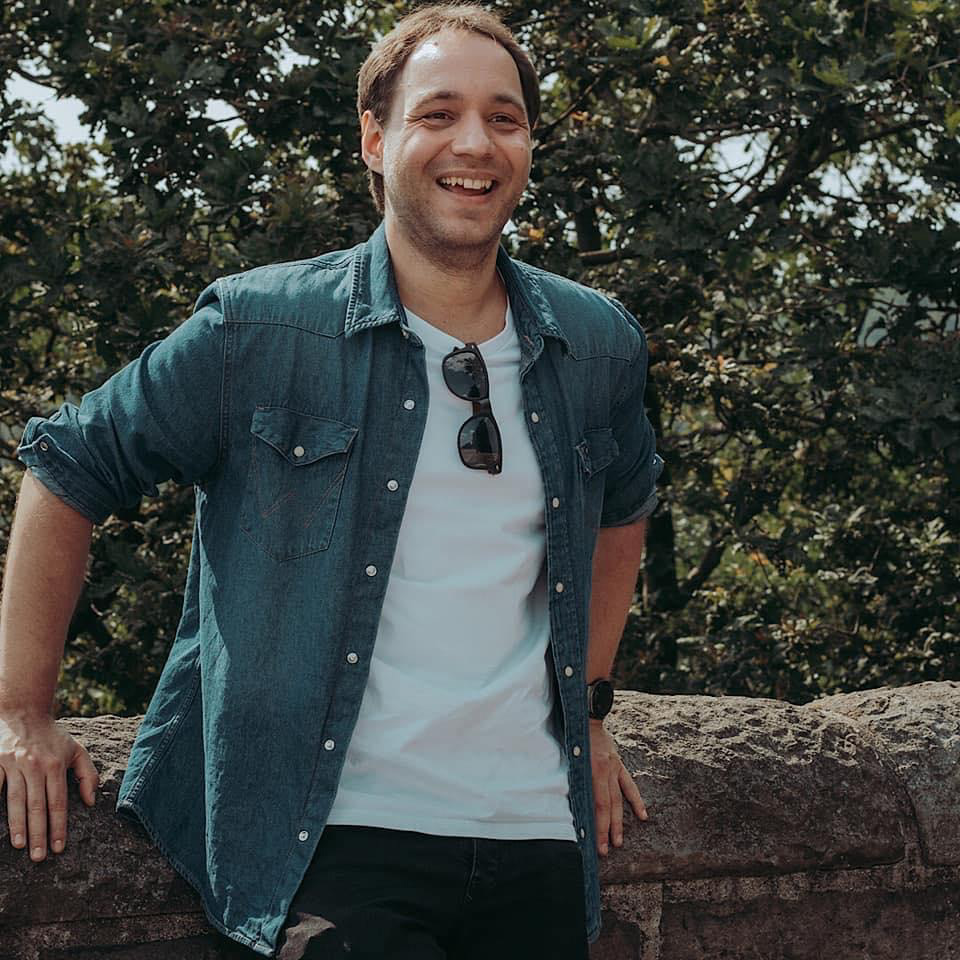
Philipp Russo
I turn real places into game content. Working with studios worldwide, from Hagen in Germany.
I spent four years at Epic Games and Quixel turning real places into assets that other studios could actually use, and writing the standards behind them. After that I built the world of a large Unreal open world game as Principal Biome Artist. Over ten years in the industry, self employed since 2016.
From the people who hired me and worked next to me.
Recommendations written on LinkedIn.
His ability to capture clean, detailed scans and turn them into production-ready assets was impressive. From raw capture through cleanup and optimization, he brought both technical skill and a strong eye for quality. Philipp is reliable, focused, and knows how to get results. If you need someone who can bridge the gap between real-world reference and game-ready art, I highly recommend working with him.
Ethan Olson
Senior Technical Artist, Founder at 3D Polygen
I had the pleasure of hiring Philipp Russo as a Principal Biome Artist during our time at Gunzilla. He delivered not only high-quality biome work but also clear, actionable documentation and robust pipelines that benefited the wider department. He worked at pace without compromising on quality. I wouldn't hesitate to recommend Philipp to any studio looking for a highly capable and dependable Principal Artist with a strong grasp of both artistic execution and pipeline development.
Henry Kelly
Ex Ubisoft, Game Developer and Director
Twenty minutes. One batch. A straight answer.
Bring one thing: a place you need captured, a batch that is stuck, or the pipeline you want your team to have. We look at where the time goes between the real world and the engine, and whether that is something I can take over. If not, I say so on the call.
- No slide deck, no sales emails afterwards
- Remote from Germany. Projects anywhere in the world.
- Under NDA if you need one